
Leak detection and targeted repairs
Moisture entry points at seams, term bars, transitions, and rooftop equipment get traced and repaired with system-appropriate materials, not generic caulk.
Serving Denver, Colorado & surrounding areas
Mon–Fri 8am–6pm · Sat 9am–2pm
Commercial roof repair · Denver, Colorado
Stop leaks, protect tenants and inventory, and get a written scope you can approve. We troubleshoot the cause, document conditions, and complete durable repairs that fit your roof system and your schedule.
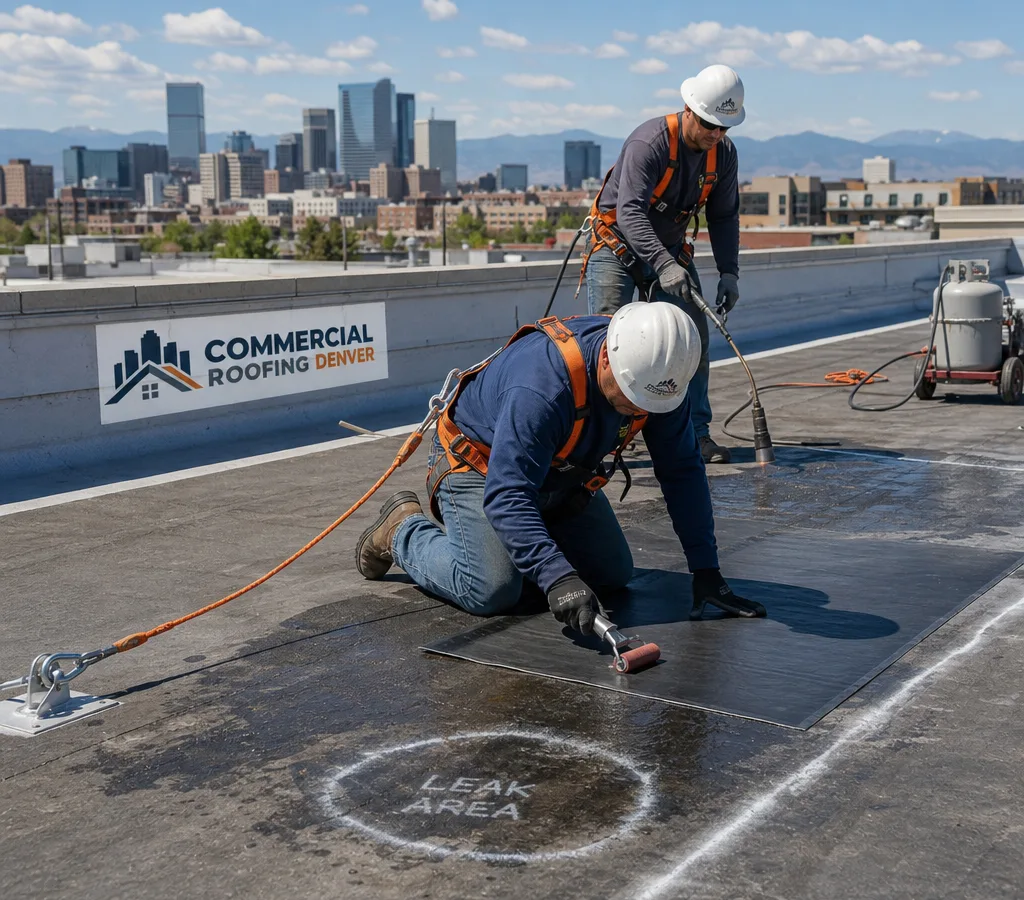
Commercial leak response
Commercial roof repair in Denver usually starts with one urgent symptom: a drip in a suite, stained ceiling tile, wet insulation, or ponding that showed up after wind or hail. The fix is rarely just sealing the spot where water appears. On low-slope commercial roofs, water can travel along the deck, insulation joints, or seams before it shows inside.
Commercial Roofing Denver handles commercial roof repair Denver CO property teams rely on when downtime and repeat leaks are not an option. We track the pathway, identify the failure point—seam, penetration, flashing, fastener back-out, membrane split, or drain issue—and repair it in a way that matches the roof type. You get clear documentation of what we found, what we repaired, and what still needs attention so you can plan capital work instead of reacting to surprises.
If you are comparing providers, this is the standard to look for: a repair plan tied to the roof system, photos of conditions, and a scope written plainly enough for an owner, facilities manager, or HOA board to approve.
Systems and scope
Repairs are selected for the existing roof assembly and the actual source of water entry—not treated as interchangeable patches.
Book Your Free InspectionMoisture entry points at seams, term bars, transitions, and rooftop equipment get traced and repaired with system-appropriate materials, not generic caulk.
Pipe boots, curb flashings, skylight flashings, and wall terminations are frequent leak sources. Repairs focus on secure attachment and proper detailing at edges and corners.
Split membrane, open laps, and punctures can often be repaired when surrounding material is sound. We prep, clean, and reinforce so the patch bonds correctly.
Clogged drains, damaged strainers, and low spots can keep water on the roof. We address the cause and verify water can move to drains and scuppers.
After Colorado storms, we look for displaced edge metal, punctures, seam stress, and impact marks that compromise waterproofing. Repairs are documented for your records.
Temporary water control can protect interiors while materials are sourced or access is coordinated. The goal is a safe, documented plan toward a permanent repair.
Front Range repair planning
Front Range weather can move quickly. Big temperature swings and strong sun accelerate expansion and contraction on low-slope assemblies, which is why we pay close attention to seams, edge details, and transitions that are already under stress.
We also plan around roof access and building use. A warehouse near I-70 often needs coordinated access around loading schedules. A retail strip in Cherry Creek may require quieter work windows and careful staging. In Capitol Hill or near downtown, tight parking and multi-tenant communication can make or break a repair day.
No matter the neighborhood, the priorities stay the same: protect the interior first, locate the actual failure point, and repair it in a way that matches the roof system's details and limitations. If a roof is nearing end of life, we will say so plainly and separate what is worth repairing now versus what belongs in a replacement plan.
For broader information on our team and coverage across the metro, many owners start with commercial roofing in Denver.
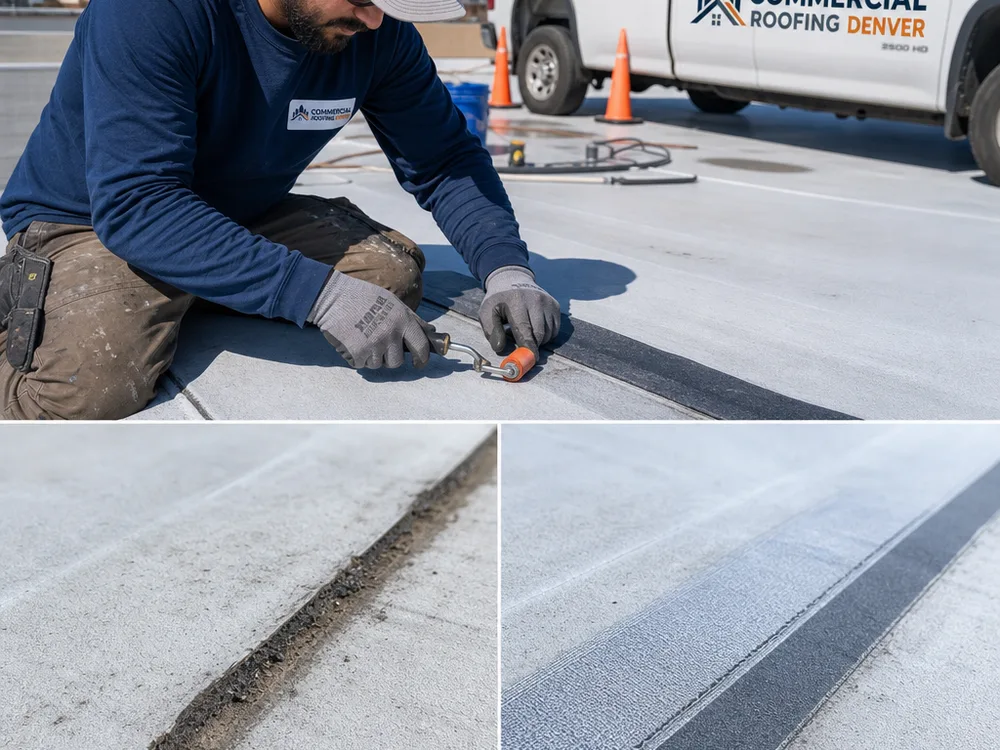
We start by understanding where water shows inside and what is at risk—tenants, equipment, or finishes. When needed, we recommend immediate steps to limit damage while we diagnose.
We inspect likely entry points near the interior symptom but also check common travel paths: seams, transitions, parapet caps, scuppers, drains, and penetrations.
You receive a written scope with photos and a clear description of what will be repaired, what is excluded, and any conditions that could affect the outcome, including saturated insulation, widespread membrane failure, or unsafe access.
Repairs are completed using methods suited to the roof type, with attention to adhesion, attachment, and detailing at edges and corners. We verify the repair area is watertight and clean up the work zone.
You get after-photos and notes that help with maintenance planning, tenant communication, and documenting storm-related conditions.
Planning your repair
Commercial roof repair in Denver typically ranges from about $450 to $2,500 for smaller targeted fixes, while larger leak investigations and multi-area repairs often run $2,500 to $9,000+. Pricing depends on roof type (TPO, EPDM, modified bitumen, metal), access and safety requirements, how much wet insulation or decking needs removal, and how many details (penetrations, edges, drains) must be rebuilt to make the repair durable. The exact cost is confirmed after an on-roof inspection and a written scope.
Book Your Free InspectionActive leak or storm damage
If you have an active leak or storm damage, share what you are seeing inside and what roof type you have, if known. We will prioritize a visit and provide a written repair plan you can act on.
“We had a recurring leak that two previous repairs never solved. This time the crew traced it to a wall transition, documented everything with photos, and the fix held through the next rain.”
“Clear scope, clean work, and they coordinated access with our tenants without turning it into a production. The reporting made it easy to get approval.”
Common questions
Response time depends on weather and safe roof access, but leak calls are prioritized and scheduled as quickly as conditions allow. If active water entry is happening, we focus first on stopping the intrusion and protecting interiors, then follow with a permanent repair once the source is confirmed.
Yes, commercial roof repair Denver buildings need often involves multiple systems across different properties, so we diagnose first and then repair with the right method for that roof type. The key is matching the repair material and detailing to the existing system so the fix bonds and moves correctly over time.
Yes, but the right fix depends on why water is staying on the roof. We check drains and scuppers for clogs or damage, look for low areas or compressed insulation, and evaluate whether the membrane and seams in the ponding area are still sound before recommending the repair approach.
Start with where the leak shows inside, when it happens—only during heavy rain, after snow melt, or anytime—and any recent work on the roof or rooftop equipment. If you have prior repair photos or a roof plan, that helps us narrow likely entry points and bring appropriate materials on the first visit.
A well-executed repair can extend service life when the surrounding membrane, insulation, and edge details are still in workable condition. If we see widespread seam failure, repeated wet insulation, or multiple leak areas across the roof, we will separate what is reasonable to repair now from what should be budgeted as replacement planning.
Yes. We document observed conditions with photos and a written scope of what was repaired, along with notes on any additional damage we found. For storm-related issues, that record helps property managers keep consistent files and supports clear communication with stakeholders.
Start with an inspection
Tell us what you are seeing—leak location, roof access details, and any recent storm or rooftop work. Commercial Roofing Denver will inspect the roof, document the cause, and recommend repairs that fit your building and timeline.