Diagnosis that goes past the stain
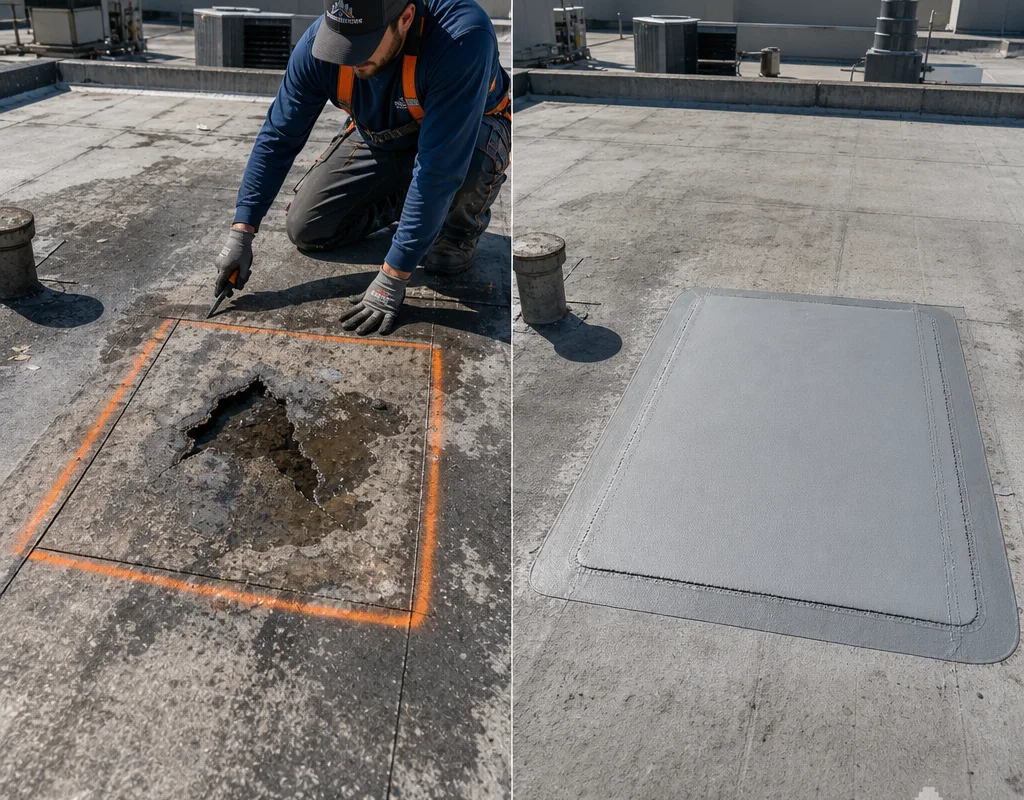
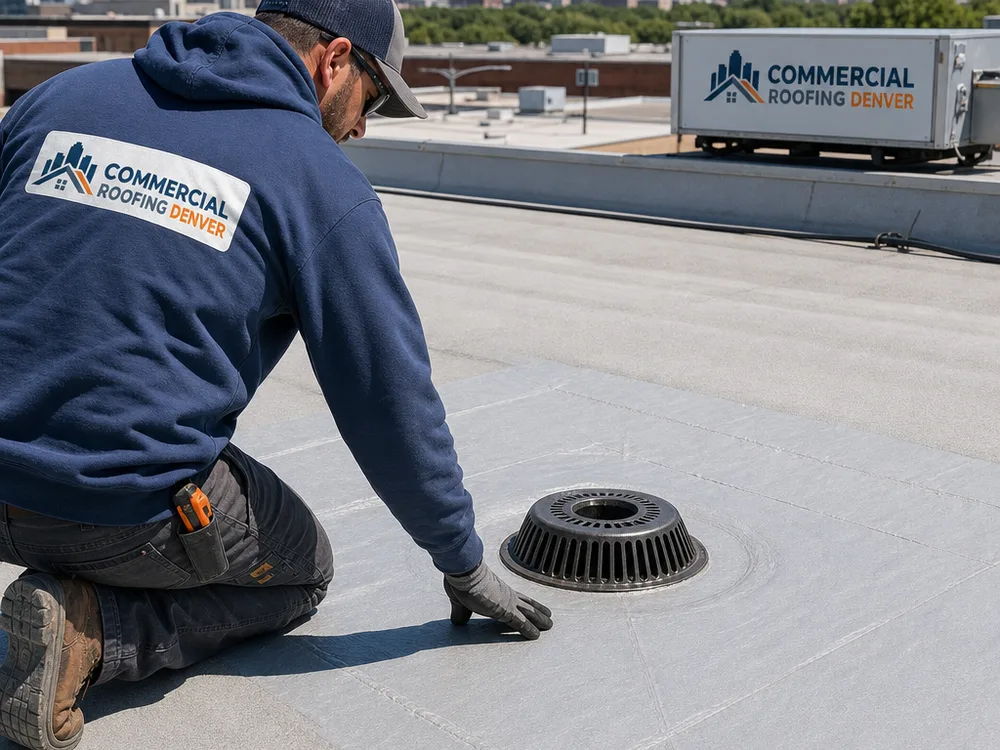
We trace likely water paths and inspect high-risk details like seams, transitions, curbs, drains, and parapet terminations so the repair targets the cause.
Serving Denver, Colorado & surrounding areas
Mon–Fri 8am–6pm · Sat 9am–2pm
Flat roof repair · Denver, Colorado
Stop leaks fast, protect tenants and inventory, and get a clear repair plan with photos and a written scope before any work starts.
Commercial context
If you searched for flat roof repair Denver, you are probably dealing with ponding water, a sudden interior drip, or ongoing leak stains that keep coming back. The fix depends on what you actually have up there: TPO or PVC single-ply, EPDM rubber, modified bitumen, or a built-up roof with gravel. Each system fails in different places, and the right repair has to address the detail that is letting water in.
In Denver, big temperature swings and strong UV exposure can accelerate seam issues on membranes and dry out mastics and coatings. Spring hail and wind events can also create punctures, loosen edge metal, and open up penetrations around vents, skylights, and equipment. A good repair plan starts with finding the entry point, then tracing how water travels under the membrane or insulation. The visible ceiling spot is rarely the true source.
Commercial Roofing Denver focuses on diagnosing the cause, documenting conditions, and completing repairs that hold up under rooftop traffic, equipment vibration, and typical Front Range weather. For buildings near downtown or in busy corridors, we coordinate work to minimize disruption and keep the roof watertight while the repair cures.
Systems and scope
Most commercial roof leaks come from details, not the open field of the roof. Common repair scopes include:
We match materials to your roof type and condition so you do not end up with an incompatible patch that fails early. When broader work is needed, we explain why and outline options that can restore the membrane surface and extend service life.
Predictable repairs
We trace likely water paths and inspect high-risk details like seams, transitions, curbs, drains, and parapet terminations so the repair targets the cause.
You get clear documentation of what was found, what will be repaired, and what should be monitored next, which helps with budgeting and approvals.
TPO, PVC, EPDM, and modified bitumen repairs are not interchangeable. We use methods that match the roof type and the specific failure.
We plan staging, access, and cure times to reduce disruption for tenants and staff, especially on retail, office, and multi-tenant properties.
If we see perimeter vulnerabilities, drainage issues, or aging flashings likely to leak next, we flag them so you can prioritize instead of guessing.
Planning your repair
Most flat roof repairs in Denver typically range from about $650 to $2,500 for a targeted leak fix or membrane patch, while larger scopes like multiple penetrations, extensive seam repairs, or drainage corrections often run $3,000 to $10,000+.
Your final price depends on roof type (TPO, PVC, EPDM, or modified bitumen), leak complexity, access and fall-protection requirements, how saturated insulation is, and whether edge metal or flashing needs replacement. The exact cost is confirmed after an on-roof inspection and a written scope.
Inspection to closeout
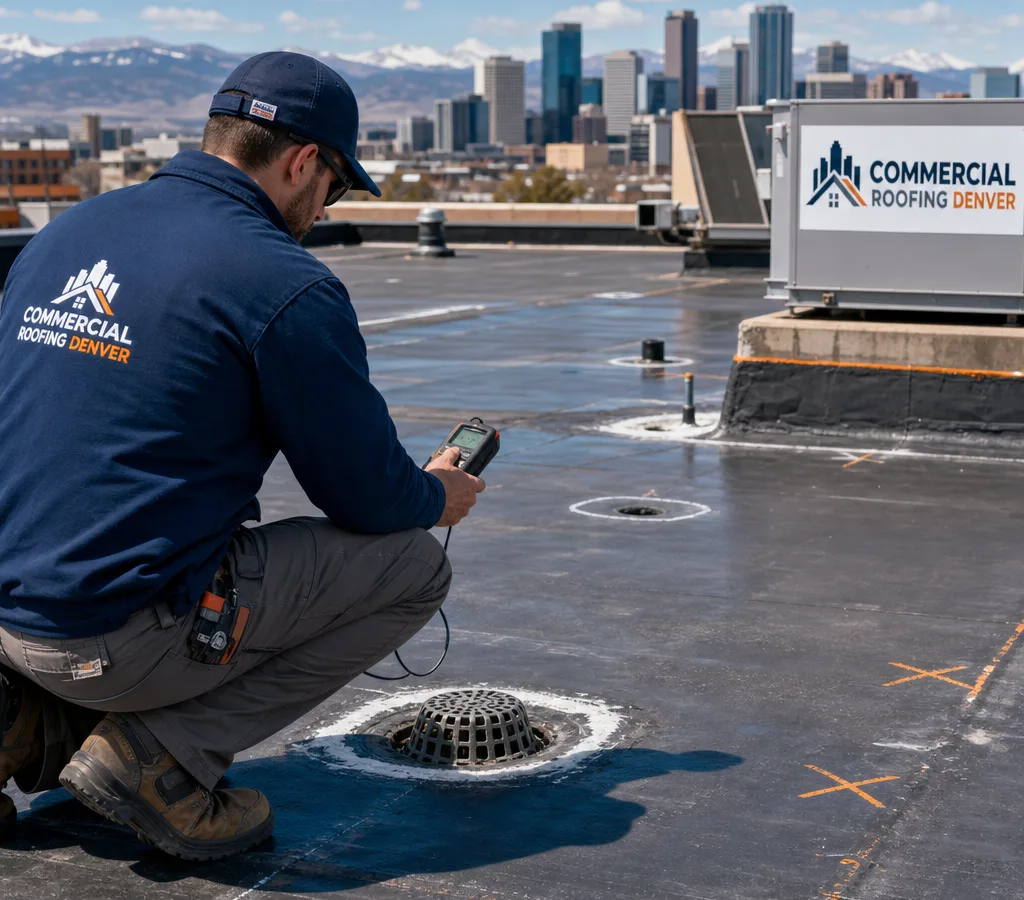
We inspect seams, penetrations, terminations, drains, scuppers, and suspect areas. When needed, we use moisture detection to understand how far water may have migrated.
You receive photos and a written scope. If there are multiple ways to solve the issue, we outline the tradeoffs in speed, durability, and disruption.
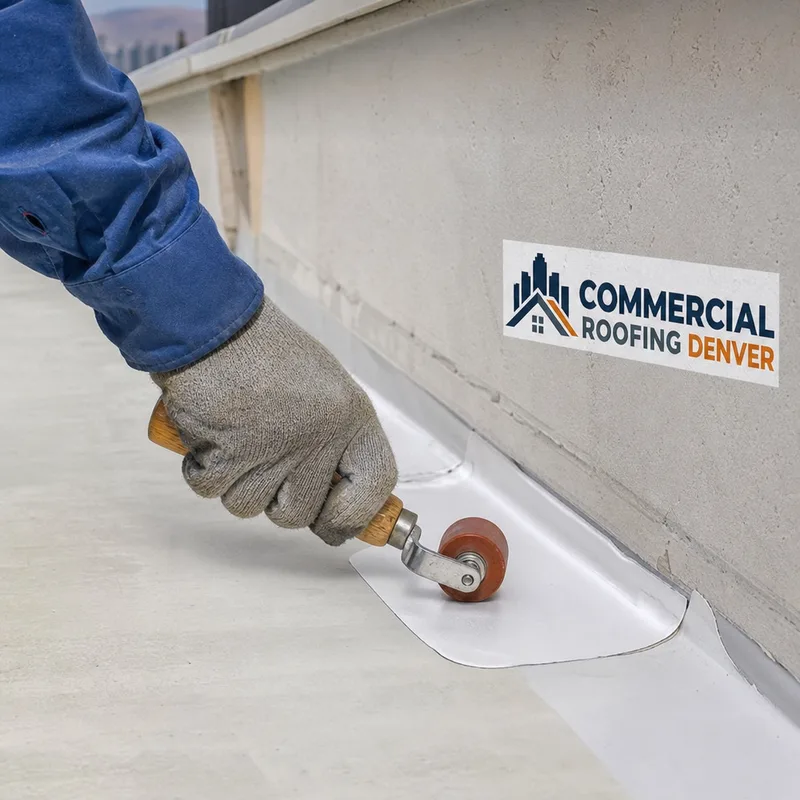
We complete the repair using the correct method for the membrane, including cleaning and preparation, welding or adhesive steps, and proper flashing details.
We verify seams, edges, and transitions, then re-check drainage flow at the repair area so water is not being pushed toward vulnerable details.
We note areas that should be monitored during the next storm cycle and can recommend maintenance intervals that fit your roof age and foot traffic.
Common questions
Leak response depends on weather and roof access, but urgent active leaks are typically prioritized for the next available crew slot. If conditions are unsafe due to high winds, lightning, or ice, the first step may be a temporary water-management plan inside the building and a scheduled on-roof repair window as soon as it is safe.
We start by inspecting the highest-risk details uphill from the interior leak and then trace likely travel paths under the membrane and insulation. On flat systems, water can move laterally until it finds an opening, so we focus on seams, penetrations, parapet terminations, and drains rather than the ceiling stain location.
No. Each membrane type requires different preparation and attachment methods, and mixing materials can cause early failure. TPO and PVC repairs rely on heat-welded patches, EPDM commonly uses seam tape and cover strips, and modified bitumen often uses compatible asphaltic products or torch and adhesive techniques depending on the system.
If insulation is saturated, a surface patch may stop visible dripping but still leave trapped moisture that can cause blistering or reduced R-value. The repair often includes cutting out and replacing affected insulation and membrane, then making a sealed tie-in to the surrounding system.
Yes, but the right fix depends on why water is pooling. Sometimes it is a clogged drain or damaged drain bowl; other times it is a structural low area that may need localized leveling or a more comprehensive restoration approach. We identify the cause and recommend a repair that improves drainage without creating incompatible transitions.
It can, which is why we document the roof type and use system-compatible repair methods. If you have an existing manufacturer warranty, we can align the repair approach with typical warranty requirements so you keep future options open for restoration or replacement planning.
Yes. In areas like Capitol Hill and Washington Park where buildings may have tight alleys or shared access, we plan staging and material handling to reduce disruption. We also coordinate roof-access times with property management so inspections and repairs do not interfere with tenant operations.
Local coordination
Flat roof repair is rarely just a technical fix. It also has to fit the building.
In LoDo and the Central Business District, roof access can involve tight loading zones and strict scheduling, so we plan material staging and keep the scope tight and well documented. In Cherry Creek, many commercial properties have more rooftop mechanical equipment and frequent service traffic, which makes puncture prevention and durable flashing details especially important. Around Stapleton (Central Park), newer commercial roofs may still be within a planned maintenance window, where a repair plan can be paired with a proactive inspection cycle.
If you are comparing contractors, the basics matter: clear documentation, system-matched repair methods, and a plan for drainage and penetrations. Commercial Roofing Denver is the main overview for local commercial roofing services and how we work.
Start with an inspection
Send the building address, roof type if known, and a few interior photos of the leak area. We will confirm next steps, provide a written scope, and schedule the repair window that makes sense for your property.