
Inspection that finds the real source
We trace leaks to seams, penetrations, wall transitions, drains, and edge metal, not just the wet ceiling tile. You get photo documentation and a scope built around the actual failure point.
Serving Denver, Colorado & surrounding areas
Mon–Fri 8am–6pm · Sat 9am–2pm
Commercial roofers · Denver, Colorado
Get a clear scope, code-aware recommendations, and a roofing crew that respects your building, tenants, and timeline. Commercial Roofing Denver works on commercial roof systems across Denver with inspection-first planning and clean, controlled job sites.
Commercial context
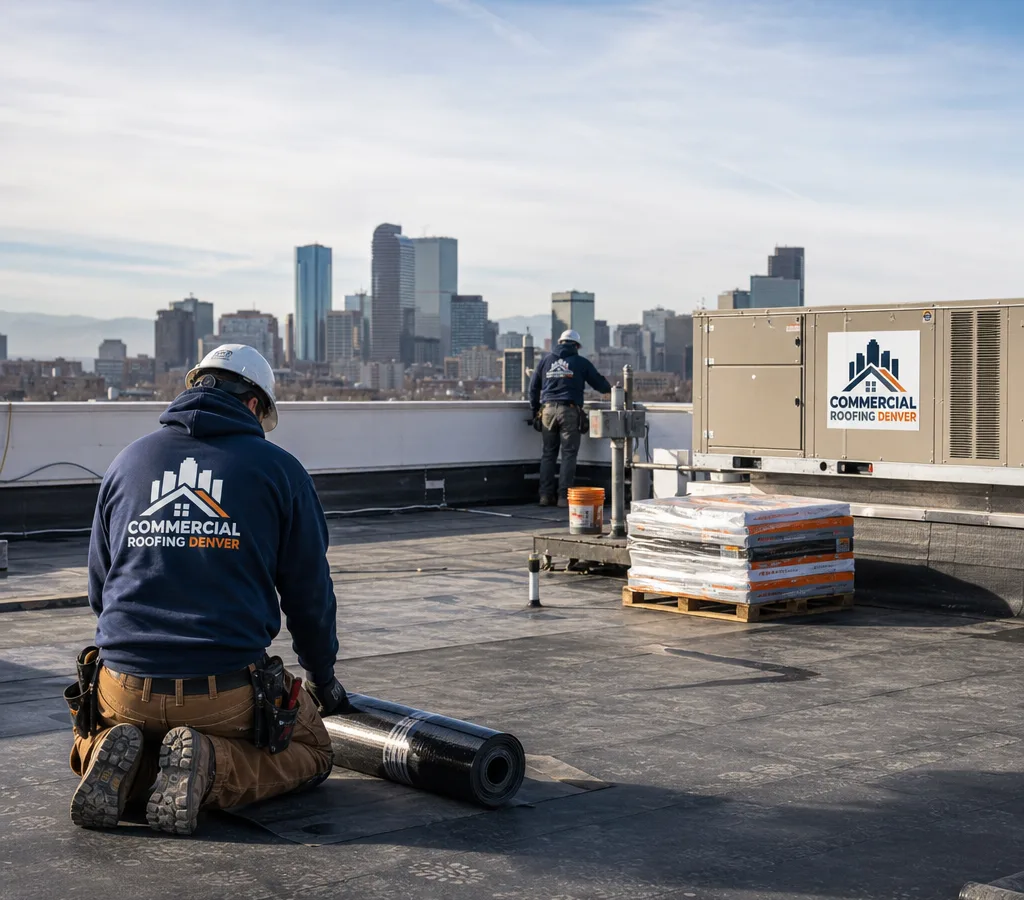
If you are searching for roofers in denver colorado, you are usually trying to answer two questions fast: what is actually wrong with the roof, and what is the lowest-risk way to fix it without disrupting the business.
Commercial roofs in Denver take real punishment. Sun at elevation, rapid temperature swings, and hail seasons can accelerate aging on membranes, flashings, and rooftop penetrations. Add in rooftop equipment and foot traffic from maintenance, and small issues can turn into leaks that travel far from the source.
Commercial Roofing Denver starts with the basics done well: a documented inspection, photos of the problem areas, and a written scope that matches the roof type you have. You should know what we recommend, why it fits the building, what the work includes, and what we are not touching so there are no misunderstandings after the crew arrives.
Need a broader look at what our team does across the metro? Our commercial roofing in Denver coverage includes the roof system types we commonly see on offices, retail, industrial, and multi-family properties.
Commercial expectations
We trace leaks to seams, penetrations, wall transitions, drains, and edge metal, not just the wet ceiling tile. You get photo documentation and a scope built around the actual failure point.
TPO, EPDM, modified bitumen, built-up roofs, and metal systems fail in different ways. We recommend repairs or replacement details that make sense for that system.
Noise, access, staging, and daily cleanup matter on commercial sites. We plan deliveries and tear-off to reduce disruption for tenants, customers, and staff.
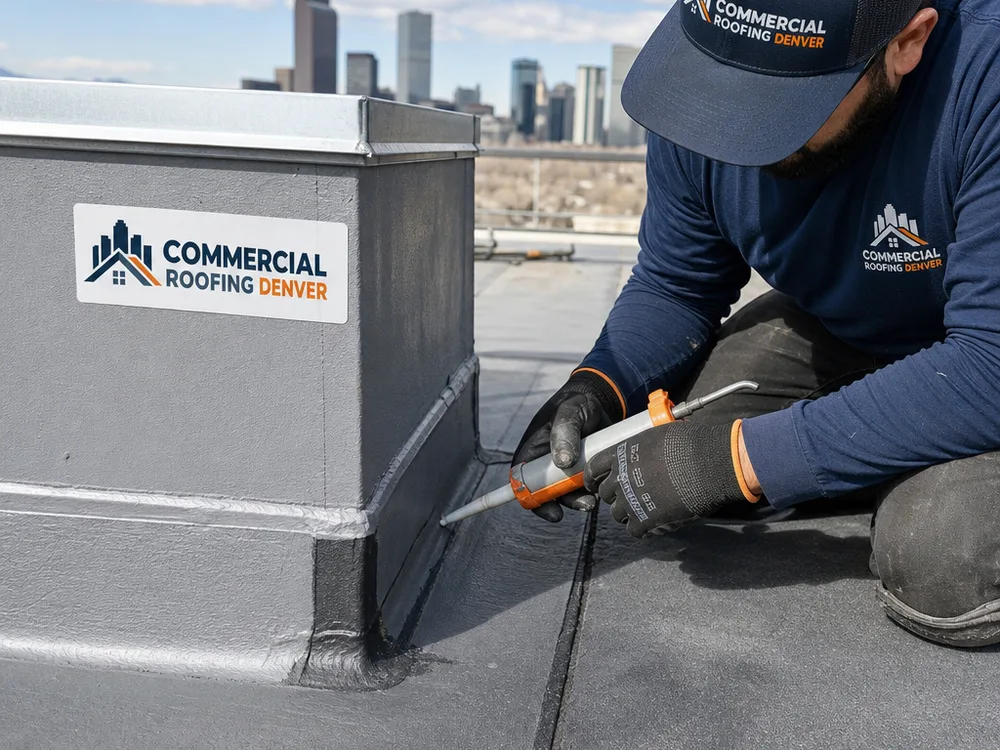
Many recurring leaks come from flashing details, pitch pans, termination bars, curb transitions, and parapet coping issues. We focus on those areas because they decide how long the fix lasts.
You get a clear written scope and closeout notes so maintenance teams know what changed and what to watch. This is especially useful for multi-building portfolios.
Systems and scope
Commercial roofers in Denver work on a wide mix of roof types, and the right approach depends on what is already installed and how the building is used.
Common systems and situations we see include:
Denver's mix of older commercial stock and newer redevelopment means we often run into transitions: additions tied into older roofs, rooftop units installed after the original build, and multiple repair generations layered over time. Those conditions are fixable, but only if the scope addresses the transition details, not just the most visible symptom.
We confirm the building type, roof access, any known leak locations, and hours of operation. If the site is occupied, we plan for safe access, staging, and cleanup from the start.
We inspect seams, flashings, penetrations, edges, drains, and any areas that show movement or previous repairs. We document findings with photos so the scope is easy to review internally.
You receive a clear scope that matches the roof system. If there are multiple viable paths, we outline the tradeoffs so you can choose based on lifespan expectations, disruption, and budget.
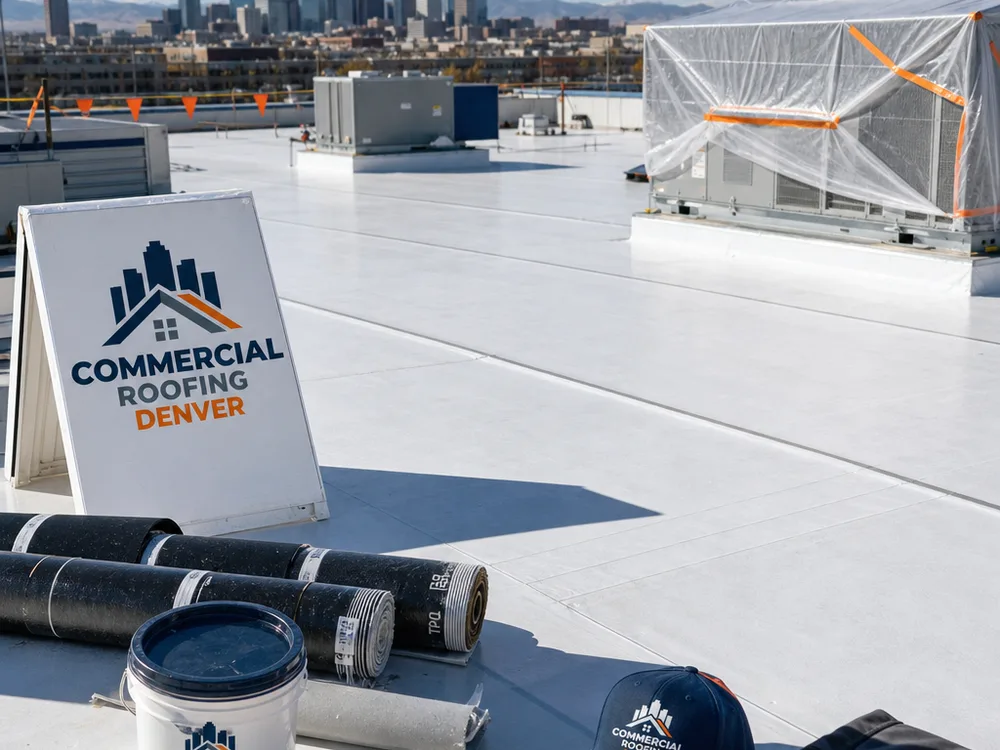
We schedule around weather windows and building needs, then set expectations for deliveries, crew access, protection of rooftop equipment, and daily cleanup.
We confirm the work performed, review photos of completed details as needed, and leave you with closeout information that helps with maintenance and future planning.
Planning your investment
Most commercial roofing work in Denver typically runs from about $600 to $2,500+ for targeted leak repairs, while larger restoration scopes often land around $4 to $9 per square foot, and full replacement commonly ranges from $8 to $16+ per square foot depending on the system.
Final pricing depends on roof size and height, the roof type (TPO, EPDM, mod-bit, metal), how many penetrations and edge details need work, tear-off needs, access and staging, and whether saturated insulation or decking repairs are required. Exact cost is confirmed after an on-roof inspection and a written scope.
Field standards
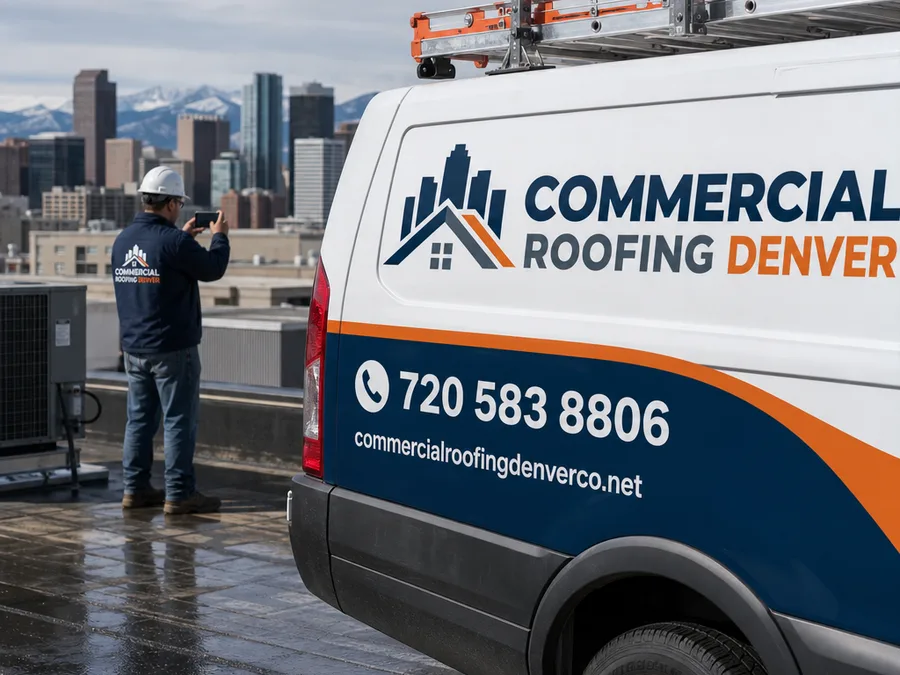
Denver service area
Denver is not one uniform roof environment. Building height, wind exposure, rooftop equipment density, and how a property is maintained change what fails first and how repairs should be scoped.
Capitol Hill and older commercial corridors: We often see multiple roof generations, including older drains, patched seams, and add-ons tied into aging parapets. The right fix usually includes bringing transitions and edge details into the scope so the leak does not return through the next weak point.
RiNo and redevelopment areas: Newer mixed-use buildings often have extensive rooftop equipment and frequent roof traffic. Protection pads, penetration flashings, and maintenance access paths become practical priorities.
Cherry Creek: Many properties prioritize appearance and controlled access. Scheduling, clean staging, and tight daily cleanup can be just as important as the technical work.
Central Park: Larger footprints and multiple rooftop units often mean more penetrations and edge detail per building. Those details drive labor and should be reflected clearly in the scope.
If you manage more than one property, we can help standardize how issues are documented so repairs and budgeting decisions stay consistent across the portfolio.
Common questions
Many active leaks can be addressed quickly once roof access is approved, but timing depends on weather windows and whether the leak source is safe to reach. In Denver, wind and storms can temporarily limit roof work, so we prioritize temporary stabilization first when needed, then return for the full repair when conditions allow.
Yes. We inspect first, then recommend repair, restoration, or replacement based on roof condition, leak pattern, and how much of the system has reached the end of its service life. A good scope explains why a targeted repair is enough, or why broader work is the lower-risk choice.
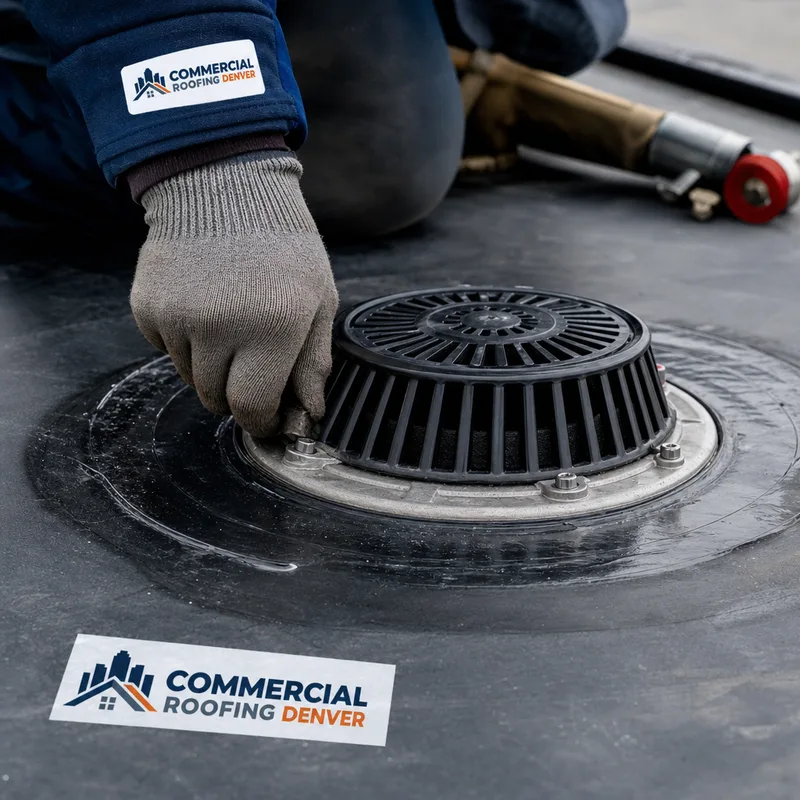
Repeat leaks most often come from missed transition details: curb flashings, wall transitions, pitch pans, termination bars, parapet coping, and drain connections. Denver's temperature swings can open small gaps over time, so repairs need to address movement and attachment, not only surface sealant.
Yes, with planning. We coordinate roof access, material staging, and work hours, and we use jobsite controls that keep entry points clean and safe. For retail and multi-tenant properties, we also align noisy work and tear-off activities with the least disruptive windows.
A commercial roofing estimate should clearly state the roof areas included, the system or repair method, what happens at penetrations and edges, how wet insulation or decking is handled if discovered, how debris will be removed, and what closeout documentation you will receive. If those items are missing, it is hard to compare bids fairly.
Some commercial roofing scopes can require permits depending on what is being replaced or modified and the building type. The safest approach is to treat permitting and code compliance as part of the planning conversation up front, then confirm requirements based on the specific scope and jurisdiction.
Start with an inspection
Tell us what you are seeing (leaks, ponding, seam issues, edge problems) and what type of building you manage. We will inspect the roof, document the findings, and provide a written scope you can use to make a confident decision.