
Written scope you can audit
You receive a clear description of tear-off (if any), insulation plan, membrane type, flashing details, and drainage work so bids can be compared on the same scope.
Serving Denver, Colorado & surrounding areas
Mon–Fri 8am–6pm · Sat 9am–2pm
Commercial roofing · Denver, Colorado
Get clear options, a written scope, and a crew that understands Colorado wind, hail, and snow loads. We inspect, propose, and build commercial roof systems that hold up and are easy to maintain.
Commercial context
If you searched for a roofing company Denver Colorado property owners can rely on, you are probably trying to answer three questions fast: What is wrong with the roof, what are the options, and what will it take to fix it without disrupting tenants or operations.
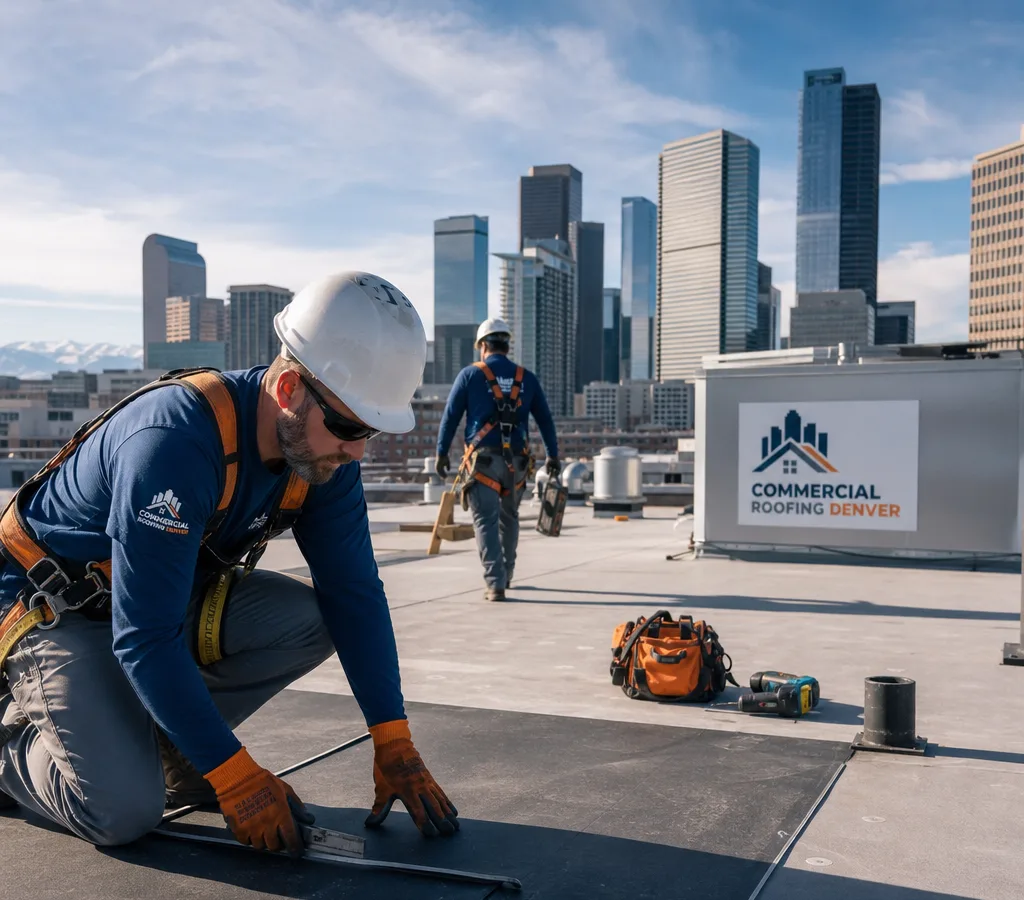
Commercial Roofing Denver handles commercial roofing in Denver, CO with a practical approach: inspect and document, write a scope you can compare, then install or repair to manufacturer and code requirements. Our work focuses on low-slope systems common across Denver's commercial buildings, including membrane and modified bitumen roofs, coatings when they are appropriate, metal details, and the drainage pieces that protect the whole assembly.
Local conditions matter. On the Front Range, UV exposure, temperature swings, wind events, and hail can turn a small defect into a leak quickly. A commercial roof plan has to account for that reality with proper flashing, securement, and a maintenance schedule that spots issues early.
Systems and scope
A good commercial roofer does more than patch leaks. You should expect help with decision-making, documentation, and long-term service.
Typical requests we handle include:
If you manage multiple buildings, consistency matters. We keep scopes and details standardized so each property gets the same approach and your maintenance is easier to budget and schedule. For an overview of the team and service area, start with commercial roofing in Denver.
Comparable proposals
You receive a clear description of tear-off (if any), insulation plan, membrane type, flashing details, and drainage work so bids can be compared on the same scope.
We document penetrations, perimeter edges, drainage points, and any visible storm damage so the problem areas are easy to see and track over time.
We explain when repairs make sense versus restoration or replacement, based on roof condition, leak pattern, and how the building is used.
We coordinate access, staging, material loading, and protection of entrances and parked vehicles to reduce disruption for tenants and staff.
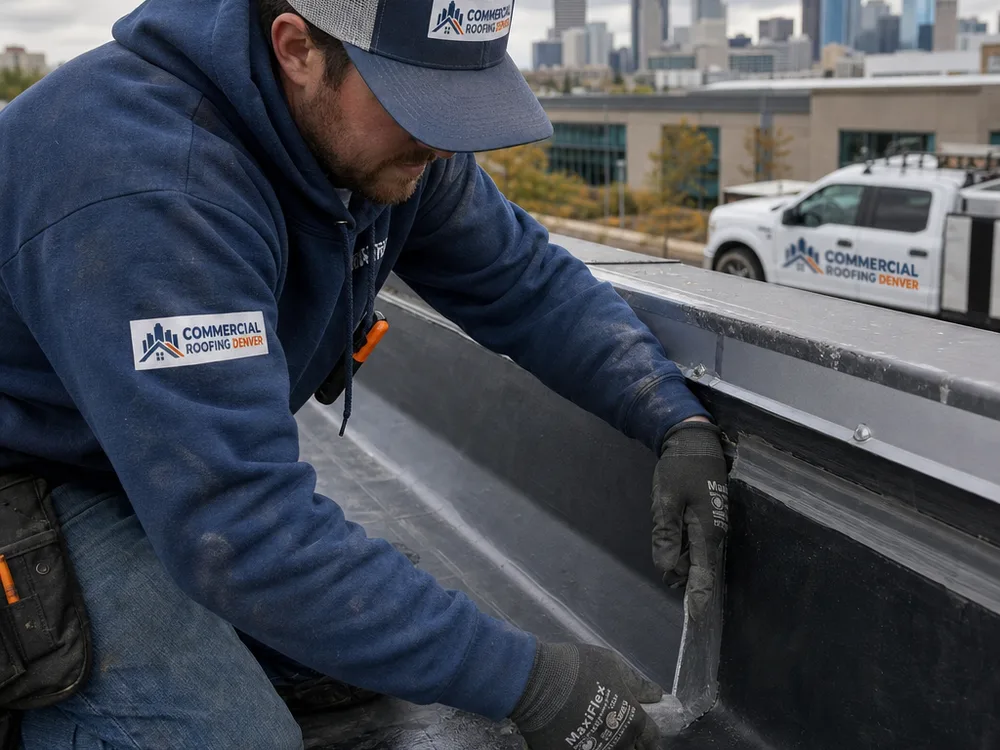
Most commercial leaks start at transitions, edges, and penetrations. We focus on terminations, flashing heights, and securement details that hold up in wind and freeze-thaw.
You get practical maintenance recommendations around drains, rooftop equipment traffic paths, and inspection intervals after major weather events.
Property-specific planning
Denver's commercial building mix is wide, and the roof strategy changes with it.
Book Your Free InspectionOlder masonry buildings and retrofits often have many rooftop penetrations and tight access. These roofs depend on clean detailing at penetrations, disciplined water management, and safe staging.
High-visibility retail and mixed-use spaces require careful work hours, pedestrian safety, and protection for entrances and storefronts.
Larger office buildings and campuses often have wide low-slope roofs, long seam runs, and multiple drainage areas. Careful layout and consistent fastening or adhesion help limit ponding stress.
Large footprints with heavy rooftop equipment and frequent foot traffic benefit from walkway pads, protective mats, and durable flashing at repeated-service areas.
Across Denver, snow and freeze-thaw cycles make drainage and perimeter edges especially important. Maintaining drains, scuppers, and downspout connections can be the difference between a dry roof and a leak after a melt.
We review access points, safety needs, visible conditions, leak history, and interior clues if needed. We document problem areas with photos and notes.
You get a direct explanation of what we found and the realistic paths forward: targeted repair, restoration, or replacement, including tradeoffs and constraints.
We define materials, edge and penetration details, insulation approach, disposal, staging, and the expected schedule window.
Before starting, we confirm access, staging, protection of entrances and vehicles, rooftop equipment areas, and tenant notifications.
Our crews follow manufacturer requirements for the selected system and verify terminations, seams, and drainage transitions as work progresses.
After completion, we walk the roof with you or your representative, review key details, and share maintenance steps and inspection timing after major storms.
Planning your investment
Commercial roofing in Denver typically ranges from about $6 to $14 per square foot for many replacement projects, while larger or more complex tear-offs, insulation upgrades, or premium systems can run $14 to $25+ per square foot. Smaller repair work is often priced as a service visit plus labor and materials, commonly landing in the hundreds to low thousands depending on access and the leak source.
Your final price depends on roof size, number of penetrations, wet insulation, edge-metal scope, code-required insulation, access and staging limits, and whether drainage work is needed. We confirm pricing after an on-site inspection and a written scope.
“We had an intermittent leak that two previous crews could not track down. The inspection photos and notes made it obvious where water was getting in, and the repair has held through the last storms.”
“The proposal was easy to compare because the scope spelled out insulation, edge metal, and how penetrations would be handled. The crew kept access clean and coordinated around our tenant schedule.”
Common questions
Choose the contractor that gives you the clearest written scope and can explain why their system and details match your roof's conditions. In Denver, ask specifically how they will handle penetrations, perimeter edges, and drainage, because those areas drive many repeat leaks after wind, hail, and freeze-thaw cycles. A comparable bid should describe tear-off (or overlay), insulation plan, membrane type, flashing approach, and how rooftop equipment areas will be protected.
Many commercial roofs can be repaired if the membrane is generally sound and insulation is not widely saturated. Replacement becomes more likely when leaks are widespread, the roof has recurring failures in multiple areas, or wet insulation is confirmed across large sections. The inspection should separate a localized defect from system-level issues.
For most buildings, you can expect a proposal after an on-site inspection and documentation of the roof conditions. Timing depends on roof size, access logistics, and whether we need to open small test areas to verify the assembly. If a leak is active, we prioritize near-term steps to control water intrusion while the full scope is being finalized.
Yes. We document roof conditions with photos and written notes, including impacts, punctures, displaced edge metal, and stressed flashing details. That documentation helps you make decisions quickly and supports consistent communication with stakeholders. An on-roof inspection is the reliable way to confirm next steps.
We work on common commercial low-slope systems, including membrane roofs, modified bitumen, coatings when the existing roof is a good candidate, and metal details at edges and penetrations. The right system depends on slope, existing assembly, rooftop equipment, and the building's tolerance for disruption, odors, and work hours.
Bring any leak history, prior repair records, warranty documents, and notes about when leaks occur. Roof access details, tenant restrictions, and locations of interior staining help make the inspection and proposal more accurate. We will also ask about rooftop equipment service frequency because foot traffic changes how the roof should be detailed and protected.
Start with an inspection
Tell us what you are seeing (leaks, storm concerns, aging roof, or planned replacement) and we will schedule an inspection, document the roof conditions, and provide a written scope with options you can compare.