
A roof-type match
Commercial systems vary, including low-slope membranes, modified bitumen, and metal. The proposed fix should match the existing assembly and detail correctly at seams, edges, and penetrations.
Serving Denver, Colorado & surrounding areas
Mon–Fri 8am–6pm · Sat 9am–2pm
Commercial roofing · Denver, Colorado
Get an inspection you can trust, a written scope you can compare, and a clear plan for repair, maintenance, or full replacement on commercial and multi-unit roofs across Denver.
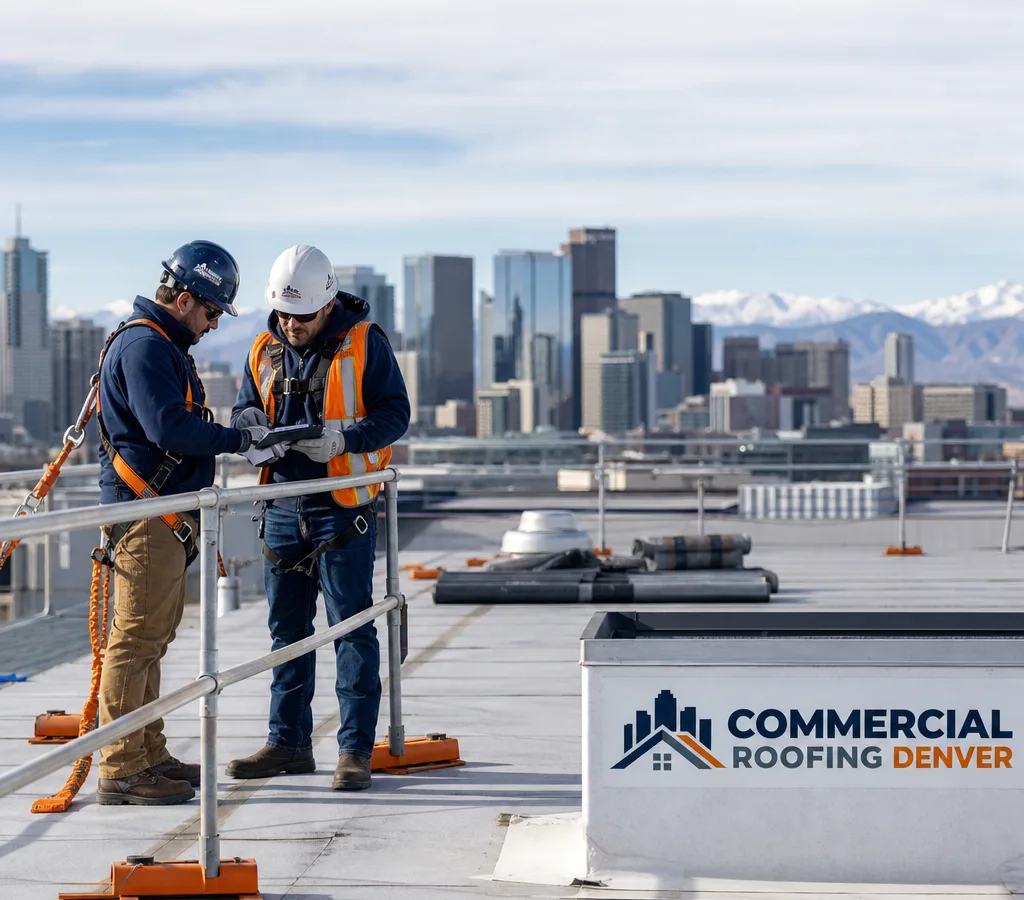
Commercial context
If you are searching for roofing contractors in Denver CO, you are probably trying to answer two questions fast: what is wrong with the roof, and who can fix it without creating a bigger problem. For commercial buildings, the stakes are higher than a single leak. Water can reach insulation, decking, tenant spaces, and electrical runs, and small issues can turn into a major disruption.
Commercial Roofing Denver works with property owners, facility teams, and managers who need a contractor that communicates clearly. That starts with a real roof inspection—not a quick look from the edge—documentation you can file, and options that fit your building's use. Denver's weather swings and sun exposure are hard on roofing membranes and metal details, so the right fix matches the existing system and addresses the failure point, not just the symptom.
You will get the most value from a contractor who can:
Systems and scope
A capable roofing contractor in Denver CO should support the roof through its whole lifecycle, from small corrections to planned replacement.
Pinpointing the entry point often takes more than finding the interior stain. Wind-driven rain can travel along decking and insulation before showing up inside. We inspect flashing transitions, HVAC curbs, vents, conduit, edge metal, and drainage points.
Seasonal checkups help catch seam issues, loose fasteners, cracked sealant, ponding areas, and damaged walk pads before they become emergencies. Many owners plan inspections around spring storms and after major wind or hail events.
When repairs become repetitive or the system is failing broadly, replacement can be the most predictable option. Scopes may include tear-off decisions, insulation strategy, tapered insulation for drainage, flashing packages, and code-driven details.
Colorado storms can produce sudden impacts and wind uplift. A thorough photo set and roof-condition notes support informed decisions and consistent records for ownership, lenders, or an insurance claim.
Buildings around Downtown, Capitol Hill, and Cherry Creek often have complex rooflines, parapet walls, rooftop mechanical units, and tight staging areas. Access planning, material staging, and protection of occupied spaces are part of the job, not an afterthought.
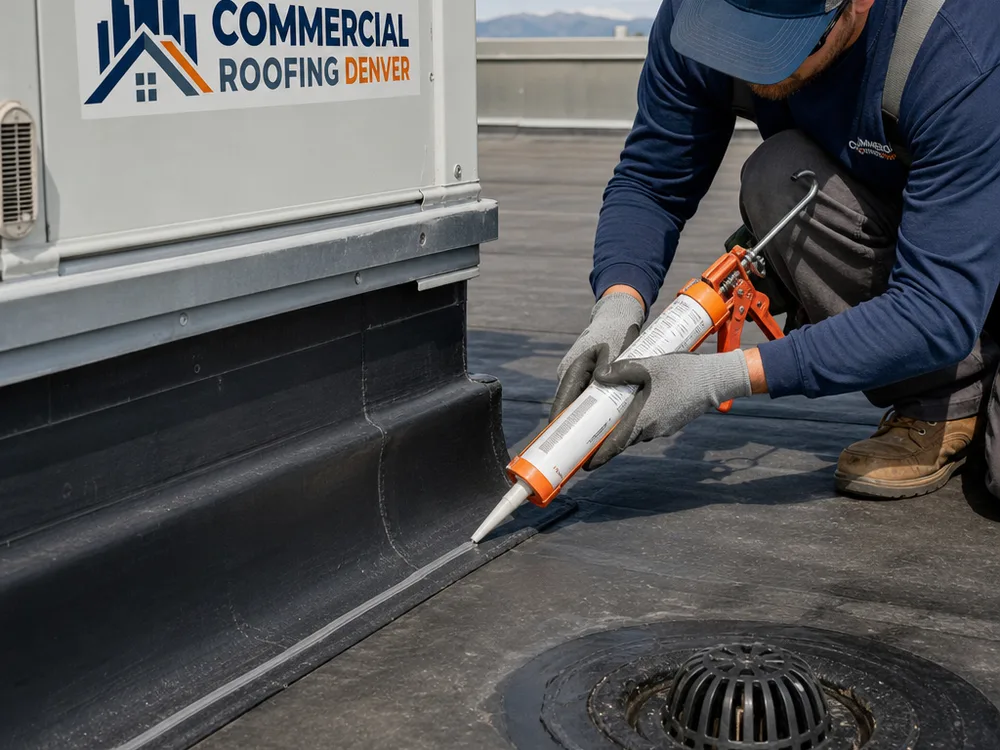
Comparable proposals
Commercial systems vary, including low-slope membranes, modified bitumen, and metal. The proposed fix should match the existing assembly and detail correctly at seams, edges, and penetrations.
Expect photos, a written scope, and clear assumptions. Wet insulation concerns or concealed conditions should be identified as possibilities and addressed with a plan.
Ponding water and clogged drains shorten roof life. The recommendation should address drains, scuppers, slope, and debris control.
Occupied buildings need staging, access routes, and fall protection addressed up front, especially around rooftop equipment and parapet edges.
Know what is covered, for how long, and which maintenance requirements apply. The scope should separate workmanship warranty from manufacturer coverage.
Denver's weather can change quickly. A trustworthy estimate explains weather delays and the temporary-protection plan if the roof is opened.
We walk the roof, identify the system and details, and note active leaks, soft areas, seam condition, flashing integrity, and drainage performance. You get a clear summary of what we saw.
You receive a written scope with repair or replacement options where appropriate. We outline preparation, materials, critical details, and inclusions versus exclusions so bids are comparable.
Before work starts, we confirm access routes, staging locations, protection for entries and pedestrian areas, and tenant or business-hour constraints.
Repairs focus on the failure point, not just surface sealant. Replacements follow the specified assembly with attention to terminations, penetrations, and edge-metal details.
At completion, you receive closeout notes and photos of key details. If maintenance is recommended to keep warranties valid, we spell out what to do and when.
Planning your investment
Most commercial roofing work in Denver typically ranges from about $600 to $2,500 for targeted leak repairs, while larger repair scopes can run $3,000 to $15,000+. Full commercial roof replacement often pencils out around $8 to $18+ per square foot, depending on the system and tear-off.
Your actual cost depends on roof size and height, access and staging, existing system type, insulation condition, drainage corrections, the number of penetrations and edge details, and whether wet materials must be removed. The exact price is confirmed after an on-roof inspection and a written scope.
Project proof
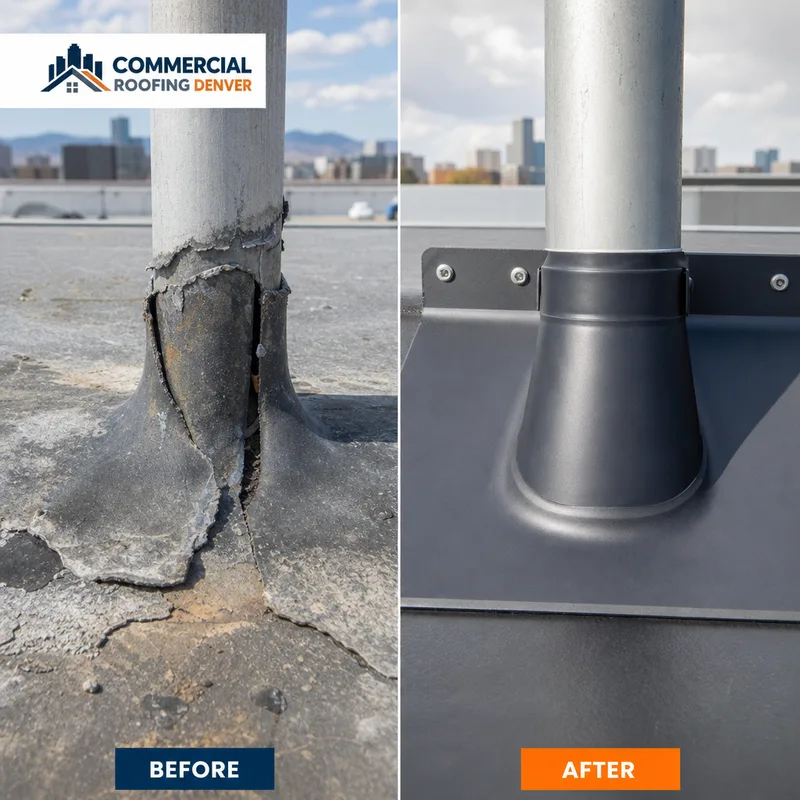
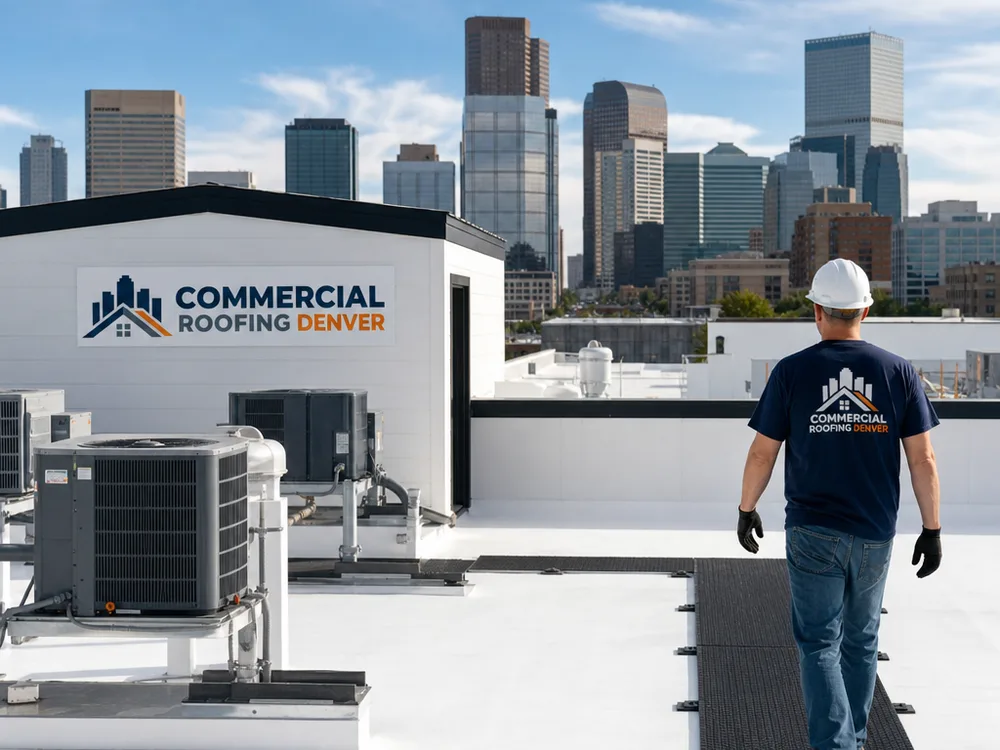
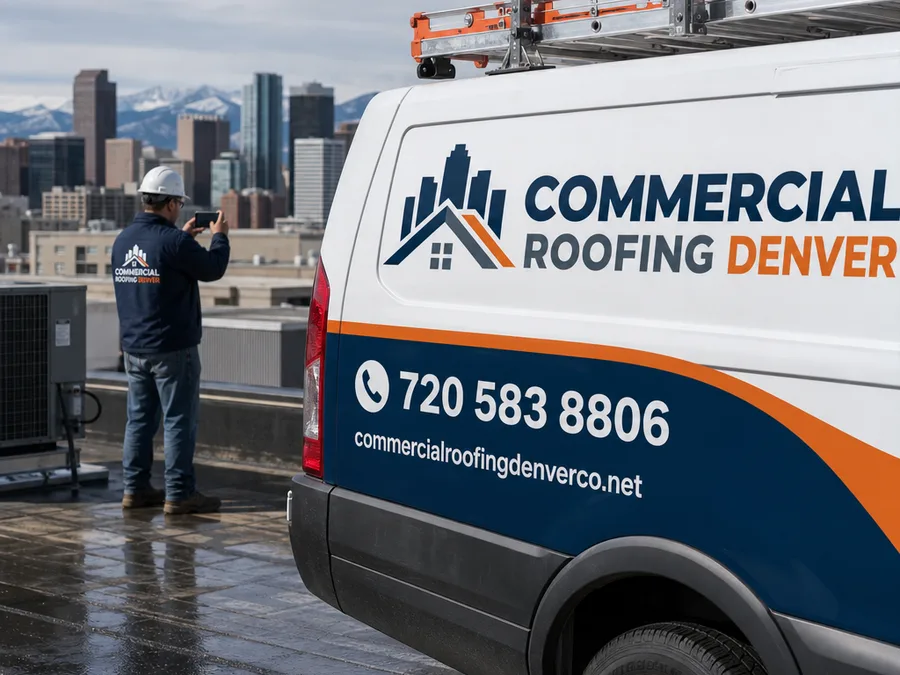
Denver roof conditions
Denver roofs deal with intense sun, big temperature swings, and sudden storms. Those conditions show up in specific ways on commercial systems:
In LoDo and Downtown, tight alleyways, loading zones, and active pedestrian areas require more access and staging planning. In Capitol Hill and Washington Park, older buildings may have multiple roof sections and historic parapet details needing careful flashing work.
Around the Denver Tech Center, rooftop mechanical equipment is common, and service traffic can wear paths into membranes unless walk pads and protection are maintained.
For multiple properties across the metro, our broader commercial roofing contractors in Denver approach centers on documentation, scheduling, and long-term planning—not just one-off fixes.
Common questions
Many commercial leaks can be triaged the same day or within 24 to 48 hours, depending on weather and roof access. The first goal is to stop water entry with a safe, compatible temporary measure if needed, then schedule a permanent repair once the roof surface is dry enough for proper adhesion and detail work.
A replacement bid should identify the existing system, specify tear-off versus overlay and why, list insulation type and thickness, include edge metal and flashing details, and state how drains and penetrations will be handled. It should also cover protection of occupied areas, cleanup, and warranty terms in plain language.
Not always. Some hail damage is cosmetic, while other impacts can compromise seams, flashings, and protective surfacing. A documented inspection should note punctures, fractures, displaced metal, and areas where water can migrate under the system before recommending repair or replacement.
Leak sourcing starts with understanding how water moves across the roof and where it can enter at transitions. We check penetrations, parapet walls, coping joints, seam laps, and drains, then trace likely pathways that match interior symptoms. Photos and notes matter because leaks can shift with wind direction and storm intensity.
Yes, many repairs can be completed during winter, but material choice and surface conditions matter. Cold temperatures and moisture can limit certain adhesives and coatings, so the repair method may change to maintain compatibility and durability. A contractor should explain what will be installed now and what may need to be finished when conditions improve.
The most effective maintenance is regular inspection of seams and terminations, clearing drains and scuppers, addressing small punctures quickly, and controlling rooftop traffic with walk pads near mechanical units. In Denver, it also helps to inspect after major wind or hail events and document changes before they become water intrusion.
Start with an inspection
Tell us what you are seeing—leak location, roof type if known, and building use—and we will schedule an inspection and provide a written scope you can act on with confidence.