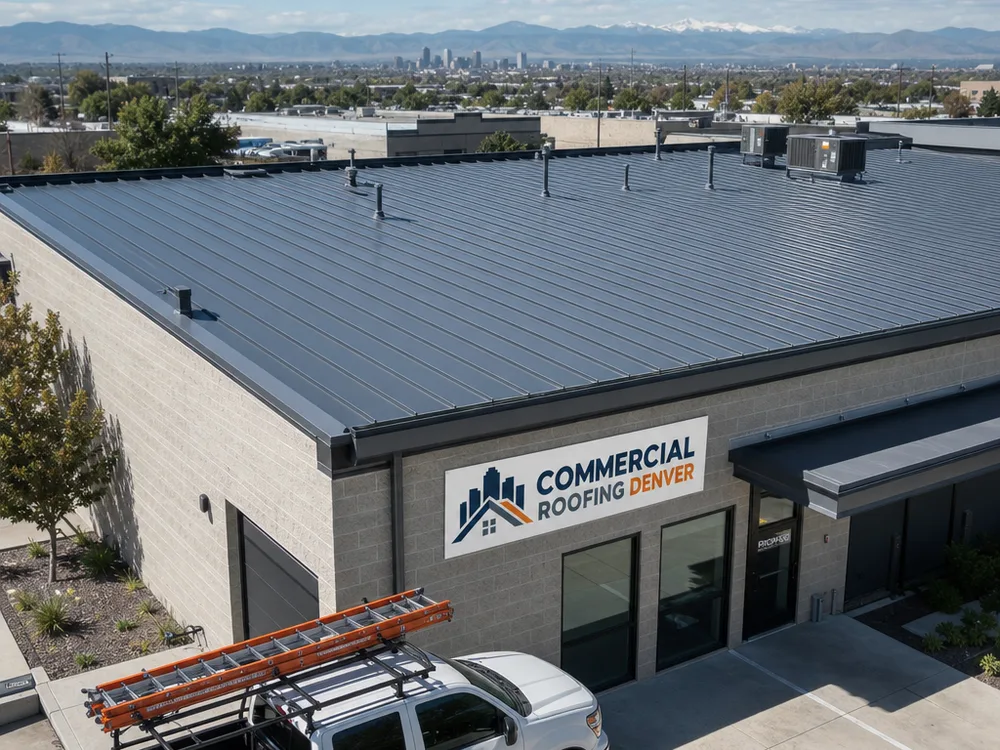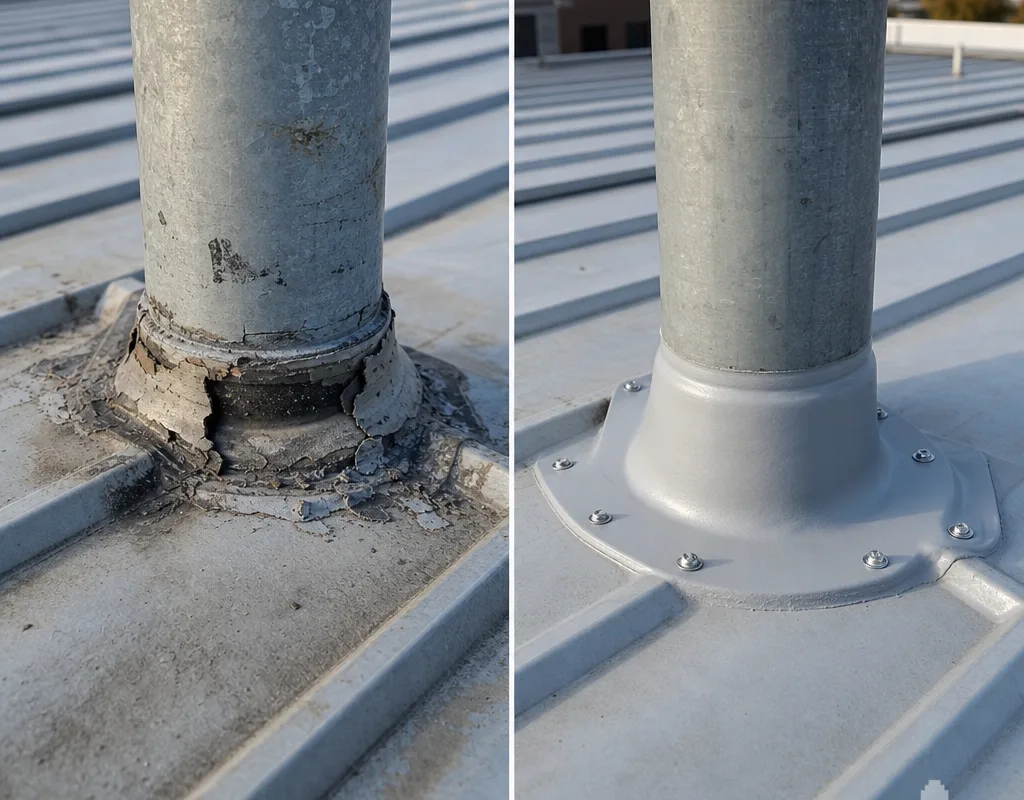
A scope based on roof type and failure points
We identify whether you have standing seam, exposed-fastener, or retrofit conditions, then target the details that cause most commercial leaks: penetrations, terminations, transitions, and drainage.
Serving Denver, Colorado & surrounding areas
Mon–Fri 8am–6pm · Sat 9am–2pm
Metal roofing · Denver, Colorado
Install or repair metal roof systems built for Colorado sun, wind, hail, and snow load. Get a clear scope, compatible materials, and a plan that keeps your building protected and your operations moving.
Commercial context
If you are searching for Denver metal roofing, you are probably balancing durability, leak prevention, and long-term maintenance against a busy property schedule. Metal roofing can be a strong fit for many commercial buildings in Denver because it handles big temperature swings, high UV exposure at elevation, and sudden hail or wind events that stress seams and fasteners.
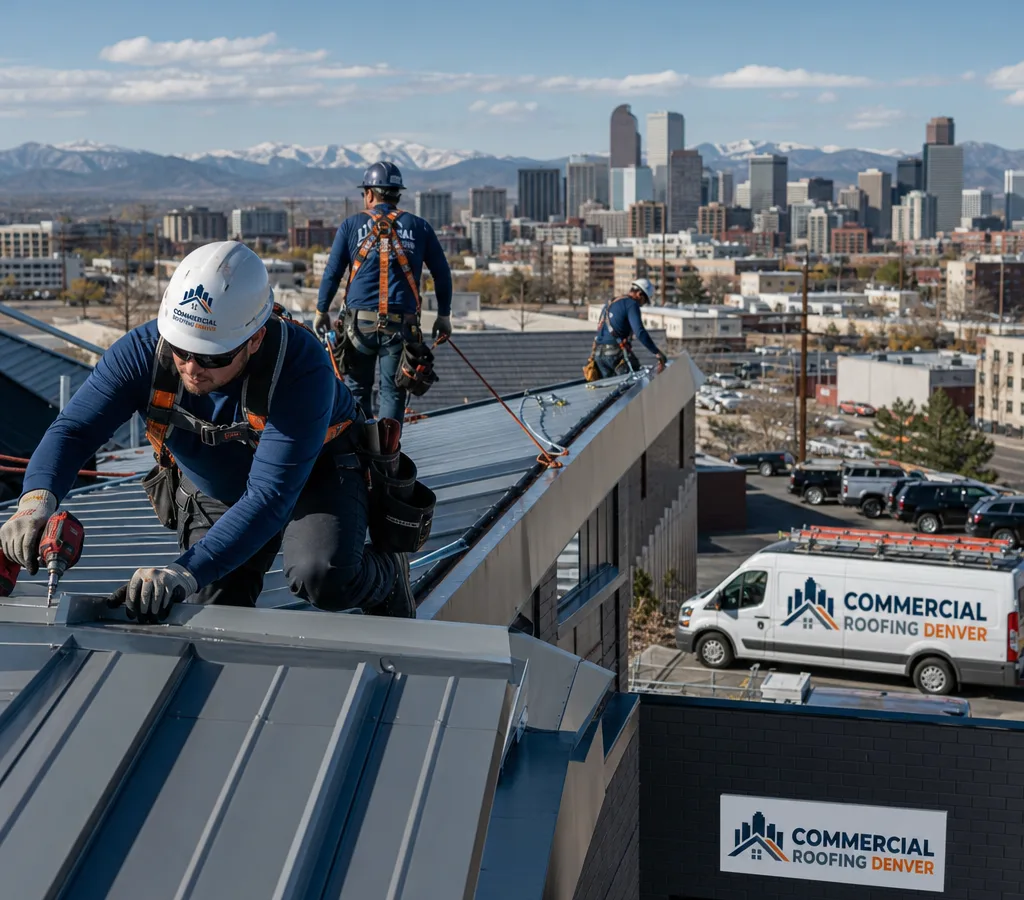
Commercial Roofing Denver works on metal roof installation, restoration, and repair for commercial properties. Our approach is practical: confirm the roof type and deck condition, choose details that match how the building actually moves, then install with a watertight plan for penetrations, transitions, and drainage.
Need a second opinion on scope before committing to a big project? Start with a roof walk and a written scope that calls out what gets replaced, what gets repaired, and what stays.
For owners and managers comparing contractors, you can also review our approach as a commercial roofing contractor in Denver.
Systems and scope
Metal roofing is not one product. The right system depends on roof slope, structure, exposure, and how your building uses HVAC, vents, and equipment.
Common commercial metal roof systems we work with include:
If the roof has a history of leaks, we look for the pattern. In Denver, issues often show up after freeze-thaw cycles when small openings at fasteners and laps expand, or after hail impacts that damage coatings and seam integrity.
Commercial workmanship
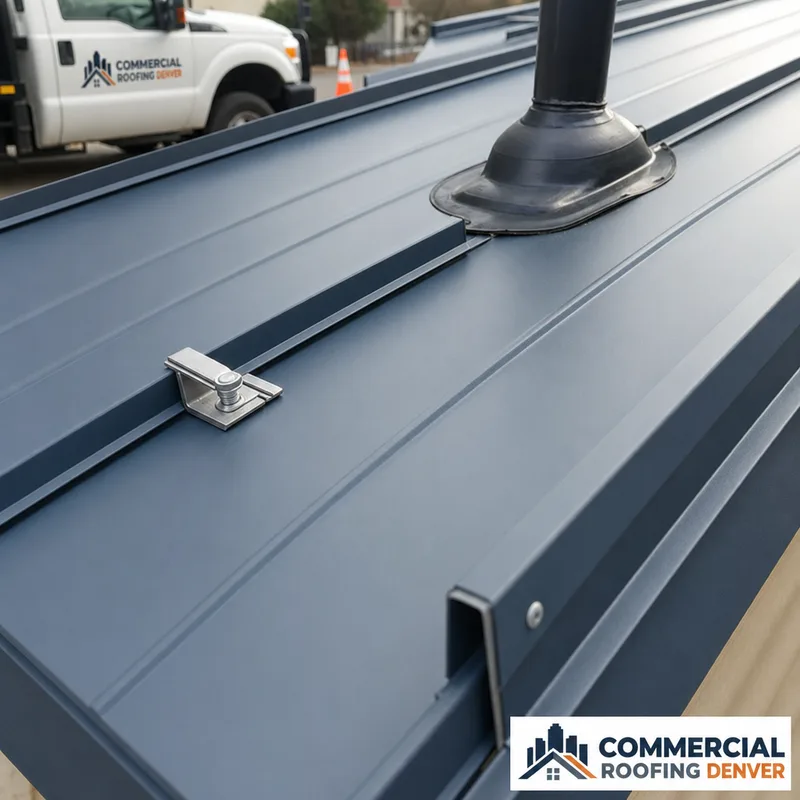
We identify whether you have standing seam, exposed-fastener, or retrofit conditions, then target the details that cause most commercial leaks: penetrations, terminations, transitions, and drainage.
Metal moves. The system has to allow thermal expansion and contraction without tearing flashings, opening seams, or working fasteners loose.
We trace leaks to the entry point and the pathway, then recommend the least disruptive fix that actually holds up through wind-driven rain and freeze-thaw.
Material staging, access routes, and daily cleanup matter more on commercial sites. We plan for tenants, deliveries, and safety so your property can keep operating.
You get clear notes on what was inspected, what was repaired or replaced, and what to watch during future maintenance cycles.
We verify roof type, slope, panel condition, attachment method, and drainage. We also note penetrations (HVAC, vents, skylights) and any interior signs of water entry.
You receive a written scope with repair or installation options. When there are tradeoffs, we explain them in plain terms: disruption, longevity expectations, and what maintenance will look like.
We confirm how terminations and transitions will be handled, what gets replaced at penetrations, and how the roof will manage movement and water shedding.
Our crews follow the scope and focus on the details that keep roofs dry: flashing, closures, sealants where appropriate, fastener placement, and panel alignment.
We review completed areas, note any items for future monitoring, and talk through routine checks after major weather events.
Planning your investment
Most commercial metal roofing projects in Denver typically range from about $10 to $20+ per square foot installed, depending on the system and the amount of tear-off. Smaller repairs often start around $500 to $1,500+, while larger leak investigations, flashing rebuilds, or targeted panel replacement can run $2,500 to $10,000+.
Your actual price depends on roof size and height, access and staging, panel type (standing seam vs exposed fastener), insulation and underlayment needs, penetration count, and how much of the existing roof can stay. The exact cost is confirmed after an on-site roof walk and a written scope.
Property-specific planning
Denver's weather puts roofs through fast transitions: warm afternoons, cold nights, spring hail, and wind-driven rain. Metal roofing can hold up well here, but only when the details match the conditions.
Thermal movement matters. Long panel runs, sun exposure, and cold snaps can stress seams and fasteners. We look at how the roof is allowed to move, how penetrations are flashed, and whether the system uses compatible components.
Snow and drainage matter too. Even though Denver is not a mountain town, snow can sit in shaded areas and refreeze. Drainage paths at eaves, valleys, and gutters need to stay clear so water does not back up into laps and terminations.
Building type and access change everything. In dense areas like Capitol Hill, access and staging can be tighter and occupant coordination becomes a bigger part of the plan. In industrial corridors around Elyria-Swansea, roof equipment and penetrations often drive the scope because there are more curbs, units, and service pathways to protect. In Cherry Creek, many commercial properties prioritize clean finish details and discreet drainage solutions that still perform. Around Washington Park, tree debris and seasonal cleanup can be a bigger maintenance factor, especially near gutters and roof edges.
If you manage multiple roofs and need continuity across locations, start with a standardized inspection format and consistent repair details so future work stays predictable.
Common questions
Yes, metal roofing is often a strong choice in Denver when the system is designed for thermal movement and detailed correctly at penetrations and terminations. Colorado sun and temperature swings can stress seams, clips, and fasteners, so the installation details matter as much as the panel type.
Most metal roof leaks trace back to penetrations, transitions, and fastener points rather than the field of the panels. Common causes include aging washers on exposed fasteners, loose attachment from movement, failed sealant at laps, improperly detailed curbs, and terminations where water can back up during wind-driven rain or snow melt.
Often, yes, if the panels and substrate are still in workable condition and the issues are localized. Targeted repairs might include replacing failed fasteners and washers, rebuilding flashing at HVAC curbs and vents, correcting termination details, or replacing damaged panels where impacts or corrosion are present.
Sometimes, but it depends on the existing roof condition, structure, drainage, and code requirements. A retrofit approach can reduce tear-off disruption on active commercial sites, but it still needs an engineered plan for attachment, moisture control, and edge details.
Timelines depend on roof size, access, weather windows, and how many penetrations and details are involved. Small repairs can be completed in a day, while installations or major retrofits may take multiple days to weeks, especially when staging and tenant coordination are part of the scope.
A good estimate should spell out the roof system type, what is being removed (if anything), underlayment and insulation scope, flashing and penetration details, edge and drainage work, and how the contractor will protect the building during construction. In Denver, it should also address how the system accounts for thermal expansion and contraction.
Start with an inspection
Tell us what building you manage and what you are seeing (leaks, rust, loose panels, recurring issues). We will confirm the roof type, inspect the details that usually fail first, and provide a written plan you can budget and schedule with confidence.